
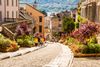
11 Most Popular Neighborhoods in Rome
Where to Stay in Rome?
The most popular neighborhoods in Rome imbue the Italian metropolis with irresistible charm and character. The city brims with historical and architectural wonders, with its cobblestone streets lined with ancient ruins, majestic cathedrals, and evocative palaces.
Knowing where to stay in Rome can be a challenge, as no 2 neighborhoods are the same, and there’s such an abundance of beautiful areas. This guide runs through some of the most amazing, from the grand facades of Prati and the rich collections of Vaticano, all the way to the ramshackle romance of La Trastevere.
1. Trastevere
A quaint and romantic region

Good for: History, Nightlife, Photo
Trastevere is an incredibly romantic neighborhood to the west of the River Tiber. It’s only a 30-minute stroll from here, through the heart of ancient Rome, to reach the Colosseum. Once the city’s Jewish Quarter, it’s an architecturally higgledy-piggledy part of town, with narrow alleys and crooked cobbled lanes galore. It’s a real joy to wander and get lost in.
At the center sits the Basilica of Our Lady in Trastevere. From there, the streets wind off in a medley of wine bars, bookstores, and ivy-covered cafes. On the hill above Trastevere is the Orto Botanico di Roma, a place to escape the buzz and discover lookouts with views across to the Vatican. Read more

Trastevere
2. Centro Storico
Full of stunning architecture and great shopping
Good for: Shoppers, History, Food
Centro Storico is the part of Rome you’re probably dreaming of when you flick through travel brochures. It occupies the very middle of the medieval city, ranging from the Piazza del Popolo in the north to the Ponte Sisto in the south. Within are some of the most iconic landmarks in Europe, such as the Pantheon, the Trevi Fountain, and the Spanish Steps.
But Centro Storico is no museum piece. It’s full of life and vibrancy. Head to the Campo de’ Fiori farmers’ markets for fresh produce, or explore the vast Piazza Navona for after-dark entertainment. There are the shopping strips of Via del Corso, Rome’s Oxford Street, or for history fans, more churches than you could wish for. Read more
Location: 00186 Rome, Metropolitan City of Rome Capital
Centro Storico
3. Garbatella
Off-the-beaten-track region with 1920s charm
Good for: Food, Budget
Garbatella can sometimes seem like a city within a city. It lies directly south of the main heart of Rome and landmarks like the Colosseum, only 2 metro stops away. However, it looks nothing like the neighboring Centro Storico district. Instead of narrow lanes and old stone sidewalks, this area is all tenement blocks and wide boulevards.
The truth is that Garbatella is one of the youngest neighborhoods in the Eternal City. It was founded in 1920 as an urban housing project built around a central park. In the last few decades, it’s become something of an off-beat alternate to the tourist neighborhoods, offering street-side pasticceria (pastry shops) and noir cocktail bars. Read more
Location: 00154 Metropolitan City of Rome Capital
Garbatella
4. Monti
Hidden cafes with views of the Colosseum
Good for: History, Photo, Food
Monti offers one of Rome’s best cafe cultures and boho bar scenes. You’ll find this neighborhood wedged between the Colosseum and Termini Station to the north, spilling down a hillside through pine-topped parks and little piazzas.
Probably the most enchanting parts of Monti come at the intersection of Piazza degli Zingari and the Via degli Zingari. Head there to find an endless array of ice-cream shops, pizzerias, and coffee shops serving espressos on the age-stained cobbles. Also don’t miss the Parco del Colle Oppio. This park has some of the best views of the Colosseum and a mix of ancient monuments that not many people take the time to see. Read more
Monti
5. Termini
The raw energy of Rome straight off the train
Good for: Photo, Budget
Termini is the area named after the great train station of Rome. It spreads north and south of the platforms on the eastern side of the central city, through regimented blocks topped by high apartment buildings. It’s always alive with things to see and eat, but also has a gritty and raw side.
North of the main station, streets like Via Marghera offer plenty of low-key and affordable pasta restaurants, bargain hostels, and backpacker bars. To the south, the neighborhood is a little overshadowed by the colossal Termini Station building, but still showcases the jaw-dropping grandeur of Repubblica plaza, which is a fitting welcome for those fresh off the train. Read more
Termini
6. Tridente
A vibrant shopping and dining thoroughfare
Good for: Shoppers, Photo
Tridente is formed by a trio of Rome’s great thoroughfares. Starting at Piazza del Popolo, it spreads south, west, and east on the Via di Ripetta, Via del Babuino, and the bustling Via del Corso. It’s capped off on its southern end by the chic shopping area of Via dei Condotti, packed with luxury outlets.
The area encompassed by these 3 great roadways is home to the Rome of “La Dolce Vita”, a land where the turquoise waters of the Trevi Fountain babble down 1 alley and the carved stones of the Spanish Steps loom above the next piazza. This is a place for jewelry shopping and sipping prosecco on the sidewalk. Read more
Tridente
7. Prati
A refined quarter with great dining and nightlife
Good for: Food, Nightlife, Photo
Prati shows a grand, more modern side of Rome. It lies on the west bank of the River Tiber across from Centro Storico, with the Vatican looming on one side and the hills of the Villa Borghese parklands on the other. The district is known for its Art Nouveau architecture, gilded palazzos, and manicured parks.
There are some must-see historical remnants, like the Museum of the Ara Pacis and the great bulwarks of the Castel Sant’Angelo. However, if you’re in need of relaxation, you’ll be more than content with the wealth of chic cocktail bars that the area has to offer. Read more
Location: Rione XXII Prati, Rome, Metropolitan City of Rome Capital
Prati
8. Ostia
The historic port and main beach district
Good for: History, Photo
Ostia is the only area of Rome where you can sit on the coast. It’s about 15 miles southwest of the Vatican, spreading up the side of the Tyrrhenian Sea with its port-side blocks of flats and softly sloping beaches.
Lots of people escape to Ostia when the weather’s hot in the midsummer, but the sands and the waves still aren’t the main draw of the district. That honor has to go to the ancient archaeological complex of Ostia Antica, which spreads over the cypress-spotted hills above the mouth of the Tiber. Once the main port for ancient Rome, it sports half-ruined theater houses and 2,000-year-old homes. Read more
Location: Lido di Ostia, Metropolitan City of Rome Capital
Ostia
9. Vatican City
Some of the best museums in the world
Good for: History, Photo
The Vatican City isn’t strictly in Rome at all. Officially it’s an independent city-state, complete with its own borders and government. But the Italian capital rolls around its mighty monuments on all sides, with the districts of Prati and Borgo, as well as the Tiber River, within walking distance.
There are 2 main reasons to come to Vatican City, for an audience with the Pope or to delve into the Vatican Museums. The latter has among the richest collections on Earth. They host priceless masterworks by the likes of Giovanni Bellini, Raphael, Caravaggio, and Leonardo da Vinci. Be warned, though, there’s simply too much to get through in a single day.
Vatican City
10. San Lorenzo
Moody street art and eclectic nightlife
Good for: Nightlife, Photo
San Lorenzo is an intriguing place, scattered with ruined buildings and scrawled with moody street art. It was one of the few parts of Rome to be hit by bombings in WWII. San Lorenzo lies east and south of Termini Station, away from the big crowds and monuments.
However, this region is anything but sleepy. It’s become something of a nightlife hub for local Italian students and professionals, offering pumping Euro disco clubs and underground wine bars in old cellars. For a moment’s peace, you can always head to the massive Campo Verano, a seemingly endless cemetery that’s packed with monumental tombs on a hill to the east. Read more
Location: 00185 Rome, Metropolitan City of Rome Capital
San Lorenzo
11. Testaccio
One of Rome’s best dining and entertainment regions
Good for: Couples, Food, Nightlife
Testaccio has a rich history in the trade of fresh produce from all over Italy. Its great food culture followed suit, being home to fantastic home-style cuisine, including most of Italy’s traditional offal dishes. Check out the 19th-century restaurant, Checchino dal 1887, for some of Testaccio’s authentic fare.
The neighborhood has a good local party scene, featuring live music and packed dance floors. You can try hopping from one disco to another. Or if contemporary art is your preferred interest, head to the Mattatoio museum. Read more
Testaccio

This article includes opinions of the Go Guides editorial team. Hotels.com compensates authors for their writing appearing on this site; such compensation may include travel and other costs.