
10 Best Things to Do for Couples in Shirahama
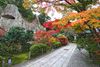
10 Great Places to Admire Autumn Leaves in Japan
Where to Find Japan’s Most Beautiful Fall Foliage
Visiting Japan in fall is a must, as the country’s countless beautiful shrines and temples, as well as its dramatic mountains and meandering rivers, are surrounded by the most glorious red and golden foliage. Japan is stunning year-round, but the best time for outdoor walks is between October and early December, when the country enjoys pleasantly cool days and low humidity.
The brilliant changing colors of Japanese maples in autumn are hugely popular with locals and tourists alike. Take in Japan’s best sightseeing spots with the added bonus of nature at its very finest. Here are some of the best spots to admire Japan’s best fall colors.
1. Eikando Temple
A temple shrouded in 3,000 glorious maples

Good for: Couples, Group, History, Photo
Eikando Temple (formerly known as Zenrinji Temple) was founded in the early Heian period. With a history of more than 1,100 years, it’s one of the oldest temples in the city. Known as the “Eikando of Autumn Leaves” since ancient times, it’s one of the most famous sites to enjoy fall foliage in Japan.
It’s easy to see why it’s a popular destination as the temple is nestled among around 3,000 Japanese maple trees, which look their best mid-November. Many different tree species, each with its own spectacular fall display, surround the temple’s pretty traditional garden, which has a path winding around a central pond. Visit between 5.30 pm and 9 pm in November for the temple’s dramatic evening illuminations.
Location: 48 Eikandocho, Sakyo Ward, Kyoto 606-8445, Japan
Open: Daily from 9 am to 5 pm
Phone: +81 (0)757-61-0007

Eikando Temple
2. Shogunzuka Seiryu-den
Where ancient Kyoto’s story began
Good for: Couples, Group, History, Photo
Shogunzuka Seiryuden is a very popular temple that, according to legend, is said to be where the story of ancient Kyoto began. It’s also lauded for its beautiful fall leaves. Perched on the side of Mount Higashiyama, the temple’s garden has winding paths with wonderful seasonal views thanks to an observation deck overlooking Kyoto. From this vantage point, you can enjoy the view of fiery red leaves spread across the entire city.
The temple and its grounds are lit up at night at certain periods of the year. The illumination of autumn leaves in the dark is particularly memorable. The beauty of this place inevitably attracts crowds in fall, but it’s relatively serene for most of the year.
Location: 28 Zushiokukachocho, Yamashina Ward, Kyoto 607-8456, Japan
Open: Daily from 9 am to 5 pm
Phone: +81 (0)757-71-0390
Shogunzuka Seiryu-den
3. Nagatoro Ravine
A valley packed with nature’s wonder
Good for: Couples, Photo, Group
The stunning Nagatoro Ravine in Chichibu, with the winding Arakawa River flowing through it, is designated as a National Site of Scenic Beauty and a Natural Monument. Its exquisite beauty attracts tourists from around the world. In fall, you’ll be treated to an abundance of vividly colored leaves on the maple and oak trees that run along the valley’s riverbanks.
The reflection of red leaves on the water is particularly beautiful. It’s a great idea to take a boat trip down the river to fully appreciate the vibrant leaves, as well as the Iwadatami layered rocks which look like traditional Japanese tatami mats. Don’t miss the illuminations at the Autumn Leaves Festival, which takes place in Nagatoro.
Location: 1164 Nagatoro, Nagatoro-machi, Chichibu District, Saitama, Japan
Phone: +81 (0)494-66-0297
Nagatoro Ravine
4. Sounkyo Gorge and Daisetsuzan National Park
Soaring cliffs and tumbling waterfalls
Good for: Couples, Photo, Group
Sounkyo Gorge is located at the base of Mount Kurodake in Hokkaido’s Daisetsuzan National Park. This stunning area has steep, almost 330 ft high, cliffs stretching along the Ishikari River. There are beautiful waterfalls of all sizes in abundance. The gorge is said to be the earliest place to see fall foliage in Japan, as leaves near Mount Kurodake’s summit start to change color around late August each year.
A must-visit near Sounkyo Gorge is the Ginsendai viewpoint that overlooks the glorious surroundings from a height of almost 5,000 feet. The scenery of coniferous and broad-leaved trees turning from green to yellow and red is beyond description. Best of all, you can take a shuttle bus directly to the lookout point.
Location: Sounkyo Gorge, Kamikawa District, Hokkaido 078-1701, Japan
Phone: +81 (0)165-89-4400
Sounkyo Gorge and Daisetsuzan National Park
5. Risshaku-Ji Temple
A temple of poetry and poetic views
Good for: Couples, Photo, Group
Risshaku-Ji Temple (also known as Yamadera, meaning “mountain temple”) is an incredible place where the poet Matsuo Basho composed his famous haiku, but that’s not the only reason to visit this site. With fabulous views over the Momiji River Valley and Mount Omoshiro, it’s also one of the best places to see fall leaves in Yamagata. The temple’s Godaido Hall is set against a stunning background of fire-colored foliage on the mountainside, together with dramatic rocky cliffs.
The best time to see fall leaves in their finest is from late October to late November. The temple is illuminated at night during this season, but you can only enjoy this from the outside as the temple is closed in the evenings.
Location: 4456-1 Yamadera, Yamagata 999-3301, Japan
Open: Daily from 8 am to 4 pm
Phone: +81 (0)236-95-2002
Risshaku-Ji Temple
6. Korankei Gorge
An abundance of historic maples
Good for: Couples, Photo, Group
Maple trees in Aichi’s Korankei Gorge were planted by San-ei, the 11th head priest of the Kojakuji Temple, every time he finished reading a volume of the Heart Sutra. There are now about 4,000 maple trees, thanks to the voluntary activities of residents, who continued the tree-planting tradition from the end of the Taisho era until the start of the Showa period in the 1920s.
There are 11 kinds of Japanese maples spreading vivid yellows, oranges, and reds along Tomoe River. The month-long Korankei Maple Festival takes place during the peak fall season. There are many gorgeous viewing spots in Korankei Gorge, including Korankei Square, Kojakuji Temple, the area around Koran Bridge, and Taigetsukyo Bridge.
Location: Iimori Asukecho, Toyota, Aichi 444-2424, Japan
Phone: +81 (0)565-62-1272
Korankei Gorge
7. Kenrokuen Garden
Vast gardens of staggering beauty
Good for: Couples, Photo, Group
The gorgeous Kenrokuen Garden dates back to the Edo period, with its public opening in 1871. It’s designated as one of Japan’s Special Places of Scenic Beauty and also one of Japan’s 3 Great Gardens. The vast site covers about 27 acres, with beautiful ponds, bridges, and lanterns throughout. It’s worth visiting any time of the year, but the fall leaves aren’t to be missed.
The garden has about 340 maple trees, producing an elegant and distinctly Japanese landscape. Understandably, Kenrokuen Garden is a highly popular place to see the changing leaves in Japan. The best time to be here is from mid-November to early December. It’s lit up in spectacular fashion on most nights in November, too.
Location: 1 Kenrokumachi, Kanazawa, Ishikawa 920-0936, Japan
Open: March–mid-October: daily from 7 am to 6 pm. Mid-October–February: daily from 8 am to 5 pm
Phone: +81 (0)762-34-3800
Kenrokuen Garden
8. Mount Takao
An astounding mountain-top view
Good for: Couples, Photo, Group
Many tourists visit Mount Takao throughout the year since it’s only 1 hour by train from central Tokyo. The busiest season is mid-November to early December, when fall leaves are at their most vivid. Enjoy spectacular scenery of Japanese maples while riding a cable car or chairlift halfway up the mountain.
After arriving on the mountainside, you can walk to a nearby observation deck called Kasumidai. Here, you can admire hundreds of trees in green, yellow, and red. When you reach the summit after a 40-minute walk from the cable car, you’ll find a square and another observation deck, from which you can take in truly magnificent views. The annual Mount Takao Maple Festival is also well worth a visit.
Location: 1799-3 Takao-machi, Hachioji, Tokyo 193-0844, Japan
Phone: +81 (0)426-73-7707
Mount Takao
9. Itsukushima Shrine and Momijidani Park
A walk down the red carpet of fall leaves
Good for: Couples, Photo, Group
Momijidani Park is a beautiful place that stretches along Momijidani River at the foot of Mount Misen Primeval Forest. Just a 5-minute walk from Itsukushima Shrine, it’s famous for its outstanding natural beauty in all seasons, particularly fall. Around 700 Japanese maple trees change to a flaming red, particularly effective against the evergreen forest behind.
The view around the red Momijibashi Bridge in the park is especially beautiful and makes an excellent photo spot. The best time to visit is from mid to late November. It’s more compact than other famous sites in Hiroshima, but the path is covered with fall leaves like a red carpet once the leaves start falling, so it’s a lovely place to take a walk.
Location: Momijidani, Miyajimacho, Hatsukaichi, Hiroshima 739-0588, Japan
Phone: +81 (0)829-30-9141
Itsukushima Shrine and Momijidani Park
10. Nara Park
Culturally significant deer abound
Good for: Couples, Photo, Group
Nara Park is famous for its wild deer, which are designated as National Natural Monuments of Japan. Opened in 1880, the 1,600-acre garden is dotted with shrines and temples, including Todaiji Temple, Kasuga Taisha Shrine, and the Shosoin Repository. This popular spot also has excellent views of Mount Wakakusa.
Nara Park has a glorious mass of evergreen trees, yellow ginkgo, and red maples in fall. Ukimido in the south of Nara Park is another highlight. The beautiful view of changing leaves from the bridge over Sagi Pond is very popular, too. The best time to visit is from mid-November to early December, but the scenery of ginkgo leaves on the ground remains even after the season has ended.
Location: 469 Zoshicho, Nara 630-8211, Japan
Phone: +81 (0)742-22-0375
Nara Park
This article includes opinions of the Go Guides editorial team. Hotels.com compensates authors for their writing appearing on this site; such compensation may include travel and other costs.